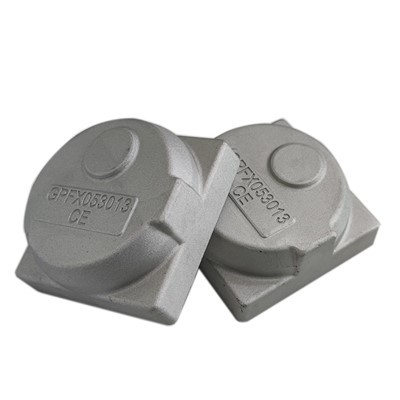
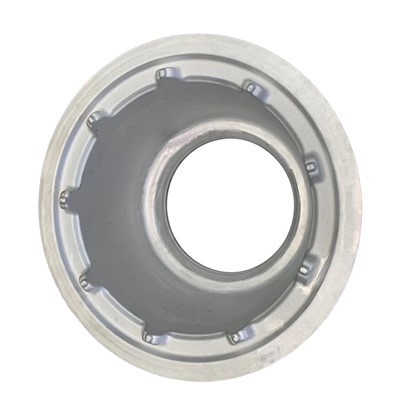
Understand the high precision achievable with aluminum die forging technology.
|
Parameter
|
Precision Level
|
Description
|
|
Dimensional Tolerance
|
±0.1 mm to ±0.5 mm
|
High dimensional accuracy for critical components
|
|
Surface Finish
|
3.2 to 6.3 µm Ra
|
Smooth surface finish reducing the need for additional machining
|
|
Weight Tolerance
|
±1% to ±5%
|
Consistent weight control for uniformity across parts
|
|
Geometric Tolerance
|
±0.5° to ±2°
|
Precise control over angles and shapes
|
|
Roundness
|
0.05 mm to 0.1 mm
|
Accurate roundness for cylindrical parts
|
|
Flatness
|
0.05 mm per 25 mm
|
Ensuring flat surfaces meet stringent requirements
|
|
Parallelism
|
0.1 mm per 100 mm
|
Maintaining parallelism in forged parts
|
Types of Aluminium Forgings:
There are several types of aluminium forgings, the three main types include: open die forgings, closed die forgings, and rolled ring forgings.
Open Die Aluminium Forging:
Also known as smith forging or free forging, open die aluminium forgings are created by hammering or pressing aluminium between dies that do not completely enclose the metal to create the desired shape through a series of movements – repeatedly hammered under high pressure. Open die aluminium forging is typically used when forgings are very large parts, low to medium quantities, or projects that require a fast turnaround time.
Closed Die Aluminium Forging:
Also called impression die forging, closed die aluminium forgings are created by pressing aluminium between a set of precut die profiles that fully enclose the metal to create the desired shape. Closed die aluminium forging is generally more expensive and used for large orders or when a finished product requires a complex shape, smaller size, or more controlled finished aesthetic.
Rolled Ring Forging:
In order to create the appropriate ring size and thickness, rolled ring forging first punches a hole in a large metal cylinder or disc, then rolls or squeezes the aluminium. Larger orders, projects where complete machining might not be necessary, and rings that are medium to large in size are the main uses for rolled ring forging.