


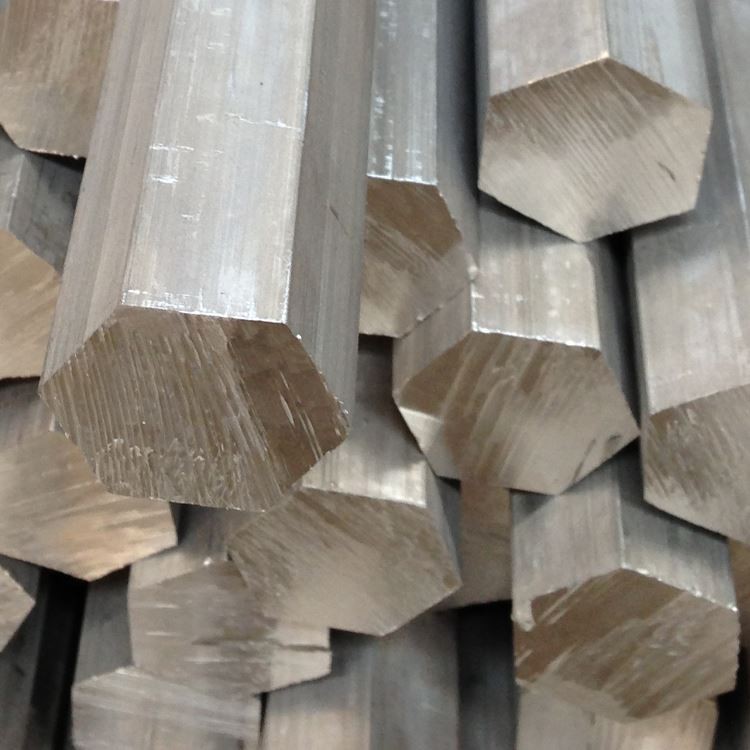

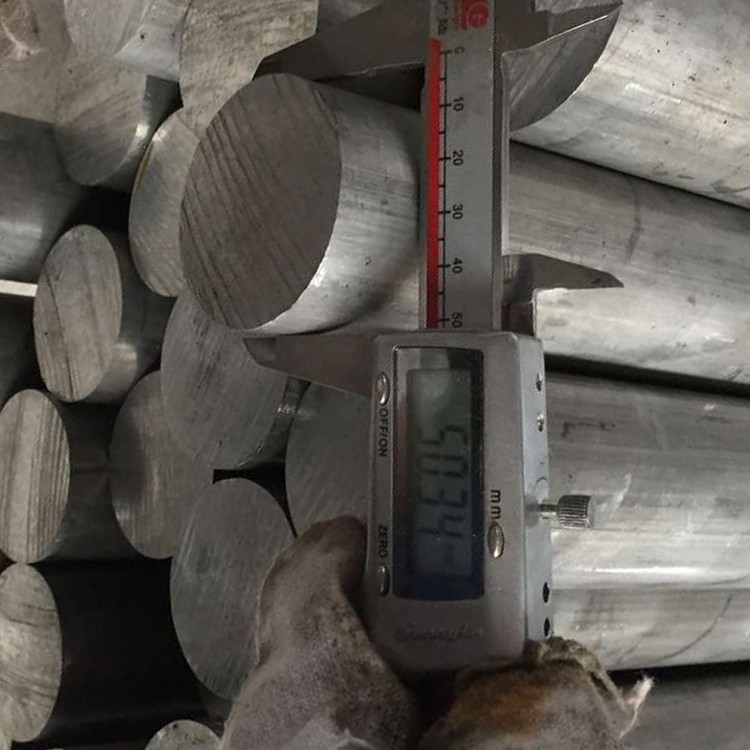
6063 Extruded Aluminum Bar
6063 extruded aluminum bar is a versatile and widely used material in the aluminum alloy industry, renowned for its combination of strength, corrosion resistance, and excellent workability. This alloy belongs to the 6000 series, which primarily contains magnesium and silicon as its alloying elements, providing it with a balance of mechanical properties and welding characteristics.
1. Material Composition & Manufacturing Process
6063 aluminum alloy (AlMgSi0.5) is a medium-strength alloy with excellent extrudability, surface finish, and corrosion resistance. This popular architectural alloy combines good mechanical properties with superior formability and anodizing response:
Primary Alloying Elements:
Magnesium (Mg): 0.45-0.90% (precipitation hardening)
Silicon (Si): 0.20-0.60% (forms Mg₂Si strengthening precipitates)
Base Material:
Aluminum (Al): ≥98.0% (balance)
Controlled Impurities:
Iron (Fe): ≤0.35% max
Copper (Cu): ≤0.10% max
Manganese (Mn): ≤0.10% max
Chromium (Cr): ≤0.10% max
Zinc (Zn): ≤0.10% max
Titanium (Ti): ≤0.10% max
Other elements: ≤0.05% each, ≤0.15% total
Premium Extrusion Manufacturing Process:
Billet Preparation:
High-purity primary aluminum (99.7% minimum)
Precise alloying element additions
Degassing treatment (hydrogen < 0.2 ml/100g)
Direct-chill (DC) semi-continuous casting
Homogenization at 560-580°C for 4-8 hours
Billet Preheating:
Computer-controlled heating to 450-480°C
Temperature uniformity: ±5°C
Oxide layer removal (scalping)
Extrusion:
Breakthrough pressure: 35-45 MPa
Running pressure: 20-35 MPa
Ram speed: 5-15 mm/sec (profile-dependent)
Exit temperature control: 510-540°C
Die temperature: 480-500°C
Cooling:
Air cooling or water quenching (temper-dependent)
Controlled cooling rate for optimal properties
Maximum distortion control
Stretching:
0.5-2.0% permanent deformation
Straightening and stress relief
Artificial Aging (T5/T6):
T5: 175-185°C for 2-4 hours
T6: Solution heat treatment (520-530°C) + Artificial aging (175-185°C for 6-8 hours)
Finishing Operations:
Cut-to-length precision: ±1mm
Surface finish enhancement
Final straightness check and correction
All manufacturing maintains digital process monitoring for complete traceability.
2. Mechanical Properties of 6063 Extruded Bar
|
Property |
T5 (min) |
T5 (typical) |
T6 (min) |
T6 (typical) |
Test Method |
|
Ultimate Tensile Strength |
150 MPa |
160-185 MPa |
205 MPa |
215-230 MPa |
ASTM E8 |
|
Yield Strength (0.2%) |
110 MPa |
120-145 MPa |
170 MPa |
180-200 MPa |
ASTM E8 |
|
Elongation (2 inch) |
8% |
10-14% |
8% |
10-12% |
ASTM E8 |
|
Hardness (Brinell) |
60 HB |
65-75 HB |
75 HB |
80-90 HB |
ASTM E10 |
|
Fatigue Strength (5×10⁸) |
70 MPa |
75-85 MPa |
95 MPa |
100-110 MPa |
ASTM E466 |
|
Shear Strength |
90 MPa |
95-110 MPa |
120 MPa |
125-140 MPa |
ASTM B769 |
|
Modulus of Elasticity |
69.5 GPa |
69.5 GPa |
69.5 GPa |
69.5 GPa |
ASTM E111 |
Property Distribution:
Longitudinal to transverse property ratio: 1.00:0.95
Wall thickness effect: <5% variation for up to 10mm thickness
Corner to flat section property variation: <10%
Surface to core hardness variation: <5 HB
3. Surface Finish & Appearance
Surface Quality Classifications:
Architectural Grade (AA10):
Ra ≤ 0.4μm surface roughness
No visible defects at 1m viewing distance
Suitable for decorative anodizing
Consistent color after anodizing
Commercial Grade (AA20):
Ra ≤ 0.8μm surface roughness
Minor defects acceptable at >2m viewing distance
Good anodizing response
Industrial Grade (AA30):
Ra ≤ 1.6μm surface roughness
Functional applications where appearance is secondary
Surface Treatment Compatibility:
Anodizing Response: Excellent
Type II (sulfuric acid): 5-25μm thickness
Type III (hard coat): 25-75μm thickness
Color consistency rating: Excellent
Architectural Class I: 18μm minimum coating
Architectural Class II: 10μm minimum coating
Mechanical Finishing:
Brushing/Polishing: Excellent response
Bead blasting: Uniform matte finish
Bright dipping: High reflectivity achievable
Painting/Coating:
Powder coating adhesion: Excellent
Wet paint compatibility: Good with proper pretreatment
Chromate conversion coating: Class 1A achievable
4. Dimensional Specifications & Tolerances
|
Parameter |
Standard Range |
Precision Tolerance |
Commercial Tolerance |
Test Method |
|
Diameter (Round) |
5-300 mm |
±0.15mm up to 30mm |
±0.25mm up to 30mm |
Micrometer |
|
±0.3% above 30mm |
±0.5% above 30mm |
|||
|
Width (Rectangle) |
10-200 mm |
±0.15mm up to 50mm |
±0.25mm up to 50mm |
Caliper |
|
±0.3% above 50mm |
±0.5% above 50mm |
|||
|
Length |
1000-6500 mm |
±2mm |
±5mm |
Tape measure |
|
Straightness |
N/A |
0.3mm/m |
0.5mm/m |
Straightedge |
|
Twist (Rectangular) |
N/A |
1° max per meter |
3° max per meter |
Protractor |
|
Corner Radius |
N/A |
±0.2mm |
±0.5mm |
Radius gauge |
Standard Available Forms:
Round Bar: Diameters 5-300mm
Hexagonal Bar: Across flats 8-75mm
Square Bar: Side dimensions 5-150mm
Rectangular Bar: Width up to 200mm, thickness from 3mm
Custom profiles available with appropriate tooling
5. Temper Designations & Heat Treatment Options
|
Temper Code |
Process Description |
Optimal Applications |
Key Characteristics |
|
T1 |
Cooled from extrusion and naturally aged |
Non-critical applications |
Moderate strength, excellent formability |
|
T4 |
Solution heat treated and naturally aged |
Forming applications |
Good formability, moderate strength |
|
T5 |
Cooled from extrusion and artificially aged |
General purpose |
Good strength, excellent extrudability |
|
T6 |
Solution heat treated and artificially aged |
Structural applications |
Maximum strength and hardness |
|
T52 |
Cooled from extrusion, stress relieved, artificially aged |
Length-critical applications |
Improved straightness, good strength |
|
T83 |
Solution heat treated, cold worked, artificially aged |
High-stress applications |
Enhanced strength with good toughness |
Temper Selection Guidance:
T5: Most economical for standard applications
T6: When maximum strength is required
T4: When post-extrusion forming is needed
T52: For applications requiring strict dimensional stability
6. Machining & Fabrication Characteristics
|
Operation |
Tool Material |
Recommended Parameters |
Comments |
|
Turning |
HSS, Carbide |
Vc=200-500 m/min, f=0.1-0.4 mm/rev |
Excellent surface finish |
|
Drilling |
HSS, Carbide |
Vc=80-150 m/min, f=0.15-0.3 mm/rev |
Low cutting forces |
|
Milling |
HSS, Carbide |
Vc=200-600 m/min, fz=0.1-0.25 mm |
Excellent chip evacuation |
|
Tapping |
HSS, TiN coated |
Vc=10-30 m/min |
Excellent thread quality |
|
Sawing |
Carbide tipped |
Vc=800-1500 m/min, medium pitch |
Clean cuts with minimal burr |
|
Threading |
HSS, Carbide |
Vc=150-300 m/min, fine feed |
Excellent thread finish |
Fabrication Guidance:
Machinability Rating: 90% (1100 aluminum = 100%)
Surface Finish: Excellent (Ra 0.5-1.6μm easily achievable)
Chip Formation: Short chips with proper tooling
Coolant: Water-soluble emulsion or minimal lubrication
Tool Wear: Minimal with proper parameters
Formability: Excellent in T1/T4 conditions
Bendability: Minimum radius = 1× thickness (T1/T4), 2× thickness (T6)
Weldability: Good with TIG/MIG methods
Thread Rolling: Excellent results in T4 condition
7. Corrosion Resistance & Protection Systems
|
Environment Type |
Resistance Rating |
Protection Method |
Expected Performance |
|
Rural/Urban Atmosphere |
Excellent |
Mill finish or anodizing |
15-20+ years |
|
Industrial Atmosphere |
Very Good |
Anodizing Class I |
10-15 years |
|
Marine Environment |
Good |
Anodizing + sealing |
5-10 years with maintenance |
|
High Humidity |
Excellent |
Standard anodizing |
10-15 years |
|
Chemical Exposure |
Moderate |
Hard anodizing + sealing |
Application specific |
|
UV Exposure |
Excellent |
Clear anodizing |
No degradation |
Surface Protection Options:
Anodizing:
Clear (natural): Excellent clarity and transparency
Color anodizing: Consistent color development
Hard anodizing: Superior wear resistance
Sealing options: Hot water, nickel acetate, PTFE
Conversion Coatings:
Chromate per MIL-DTL-5541
Non-chromium alternatives
Mechanical Finishing:
Brushed finish: Uniform directional pattern
Polished finish: Mirror-like appearance achievable
Sandblasted: Consistent matte texture
Organic Coatings:
Powder coating: Excellent adhesion and durability
Liquid paint: Good with proper pretreatment
Clear protective coatings: UV and abrasion protection
8. Physical Properties for Engineering Design
|
Property |
Value |
Design Consideration |
|
Density |
2.70 g/cm³ |
Weight calculation for components |
|
Melting Range |
615-655°C |
Thermal processing limitations |
|
Thermal Conductivity |
200-220 W/m·K |
Heat sink applications |
|
Electrical Conductivity |
50-55% IACS |
Electrical applications |
|
Specific Heat |
900 J/kg·K |
Thermal mass calculations |
|
Thermal Expansion (CTE) |
23.4 ×10⁻⁶/K |
Thermal expansion allowances |
|
Young's Modulus |
69.5 GPa |
Structural calculations |
|
Poisson's Ratio |
0.33 |
Structural analysis parameter |
|
Reflectivity |
80-85% (polished) |
Optical/lighting applications |
Design Considerations:
Operating Temperature Range: -80°C to +175°C
Property Retention: Excellent below 100°C
Electrical Conductivity: Higher than many aluminum alloys
Magnetic Properties: Non-magnetic
Recyclability: 100% recyclable, high scrap value
Environmental Impact: Low carbon footprint compared to steel
9. Quality Assurance & Testing
Standard Testing Procedures:
Chemical Composition:
Optical emission spectroscopy
Verification of all major elements and impurities
Mechanical Testing:
Tensile testing (longitudinal)
Hardness testing (Webster/Brinell)
Dimensional Inspection:
Diameter/dimensions at multiple locations
Straightness verification
Surface finish measurement
Visual Inspection:
Surface defects assessment
Die line evaluation
Surface appearance uniformity
Specialized Testing (When Required):
Anodizing response test
Grain structure evaluation
Conductivity testing
Standard Certifications:
Mill Test Report per EN 10204 2.1/3.1
Chemical analysis certification
Mechanical properties certification
Dimensional inspection report
Heat treatment certification (for T6 temper)
10. Applications & Design Considerations
Primary Applications:
Architectural components:
Window and door frames
Curtain wall systems
Railings and balustrades
Decorative trim and moldings
Transportation:
Automotive trim and components
RV and trailer components
Bicycle frames and components
Electrical:
Heat sinks and thermal management
Electrical enclosures and housings
LED lighting fixtures and profiles
Consumer goods:
Furniture components
Appliance trim and parts
Shower enclosures and bathroom accessories
Industrial components:
Pneumatic cylinder tubes
Machine guards and frames
Conveyors and material handling
Design Advantages:
Excellent surface finish for aesthetic applications
Superior extrudability for complex profiles
Good strength-to-weight ratio
Excellent corrosion resistance
Outstanding anodizing response
Ease of fabrication and joining
Cost-effective compared to higher-strength alloys
Consistent properties and quality
Readily available in diverse shapes and sizes
Sustainable material with high recycled content potential
Design Limitations:
Lower strength compared to 6061/6082 alloys
Not recommended for highly stressed structural applications
Limited weldability compared to 6061
Reduced mechanical properties in weld heat-affected zones
Temperature limitations above 175°C
Economic Considerations:
Excellent balance of cost and performance
Lower processing costs than higher-strength alloys
Reduced machining costs due to excellent machinability
Long service life with minimal maintenance
High scrap value at end of life cycle
Hot Tags: 6063 extruded aluminum bar, China 6063 extruded aluminum bar manufacturers, suppliers, factory, aluminum hex bar, extruded aluminium 7075, aluminum bar that is recyclable, aluminium extrusion custom, aluminium extrusion 7075, aluminum bar that is efficient


Send Inquiry
