


How Much Weight Can Aluminum Support?
Jun 19, 2025
Wondering if aluminum is strong enough for your project? It's a common question with a not-so-simple answer. You need to understand that the strength of aluminum isn't just one number.
Aluminum's weight-bearing capacity varies enormously depending on the specific alloy, temper, shape, thickness, and design of the part, plus how the load is applied. There's no single answer; it must be calculated for each specific case.
At SWA Forging, we've been manufacturing high-quality aluminum alloy forged rings and discs since 2012. Our clients, whether they are traders or machining companies, often need components for applications where load-bearing capacity is critical. While a solid forged disc is inherently strong, the principles that determine how much weight any aluminum piece can support are universal. It's not just about the material itself, but how it's used.
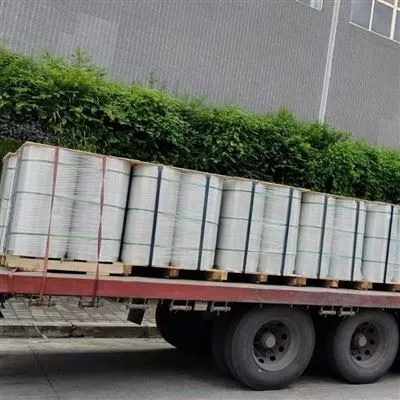
What is the strength to weight of aluminium?
You hear that aluminum is "light but strong," but what does that actually mean? You want to grasp this key concept to see why aluminum is so popular in many industries.
Aluminum's strength-to-weight ratio is a measure of its strength (how much stress it can withstand before deforming or breaking) divided by its density. Many aluminum alloys have a high strength-to-weight ratio, meaning they offer good strength for relatively little weight.
The strength-to-weight ratio is a really important characteristic for any structural material. It tells you how much strength you get for each unit of mass. A material with a high strength-to-weight ratio is efficient because it can provide the necessary structural integrity without adding excessive weight. This is precisely where aluminum shines. Pure aluminum itself is relatively soft. However, when it's alloyed with other elements (like copper, magnesium, silicon, zinc) and often heat-treated, its strength can be dramatically increased. Since aluminum's density (about 2.7 g/cm³) is roughly one-third that of steel (about 7.8 g/cm³), even if an aluminum alloy isn't as strong as a high-strength steel in absolute terms, it can often provide similar structural performance at a significantly lower overall weight. For example, a common alloy like 6061-T6 has a good tensile strength. When you divide that strength by its low density, you get a very favorable ratio. This is why aluminum alloys are extensively used in aerospace, automotive (to improve fuel efficiency), and even in our large forged rings and discs where reducing inertia or overall system weight can be beneficial. I remember a client who needed a large rotating component; using a forged aluminum alloy allowed them to reduce the motor size needed to drive it, saving both cost and energy, all thanks to this excellent strength-to-weight characteristic.
Is aluminum strong for its weight?
So, is aluminum genuinely a strong contender when you factor in how light it is? You want a clear confirmation of its efficiency as a structural material.
Yes, aluminum is very strong for its weight. Many aluminum alloys offer impressive strength levels while being significantly lighter than steel, making them an excellent choice when high strength and low weight are required.
Absolutely, aluminum is remarkably strong for its weight. This is one of its defining advantages and a primary reason for its widespread use in demanding applications. As I mentioned, when you compare it to materials like steel, aluminum provides a compelling alternative when weight reduction is a priority. Consider the aerospace industry. Aircraft manufacturers rely heavily on high-strength aluminum alloys because every kilogram saved in aircraft weight translates to fuel savings or increased payload capacity. Alloys like 7075-T6 can achieve tensile strengths comparable to some mild steels but at only a third of the weight. Even in everyday items, this property is valuable. Think about bicycle frames. Aluminum frames are light, making the bike easier to pedal and maneuver, yet they are strong enough to withstand the stresses of riding. At SWA Forging, our customers often specify aluminum for large forged rings or discs precisely because they need a component that can handle significant mechanical loads without being excessively heavy. For example, a large forged aluminum ring used in a piece of industrial machinery might need to withstand rotational forces or pressures. Its high strength-to-weight ratio means the overall machine can be lighter, potentially easier to install, or require less power to operate. This efficiency is a direct result of aluminum being inherently strong for its weight. We often provide product quality certificates that detail the mechanical properties achieved, giving our clients the assurance of this strength.
|
Feature Comparison |
Aluminum Alloy (e.g., 6061-T6) |
Mild Steel (e.g., A36) |
Implication |
|
Density |
~2.7 g/cm³ |
~7.8 g/cm³ |
Aluminum is significantly lighter. |
|
Tensile Strength |
~310 MPa |
~400-550 MPa |
Steel can be stronger in absolute terms. |
|
Strength/Weight |
High |
Moderate |
Aluminum often wins for weight-critical applications. |
Will 3mm aluminium bend?
You have a 3mm sheet or piece of aluminum and you're worried about it bending. Is this thickness inherently weak? You need to know what factors influence its resistance to bending.
A 3mm thick piece of aluminum can bend easily or be quite rigid, depending on the specific alloy, its temper (hardness), the shape of the piece (e.g., a flat sheet vs. a structured profile), and how and where the force is applied.
A 3mm thickness of aluminum isn't a fixed guarantee of either weakness or strength against bending; it's highly contextual. Several factors come into play:
Alloy Type: Different aluminum alloys have vastly different strengths. A 3mm sheet of a soft, highly ductile alloy like 1100-O (annealed temper) will bend very easily, almost like stiff cardboard. However, a 3mm sheet of a high-strength alloy like 7075-T6 will be significantly more resistant to bending.
Temper: The temper refers to the hardness and strength achieved through heat treatment or strain hardening. For example, 6061-T6 (solution heat-treated and artificially aged) is much stronger and more resistant to bending than 6061-O (annealed). So, a 3mm piece of 6061-T6 will resist bending much more than 3mm of 6061-O.
Shape and Span: A flat 3mm sheet spanning a large distance will bend under its own weight or light pressure. However, if that same 3mm thick aluminum is formed into a structural shape like an angle, a channel, a tube, or if it's corrugated, its resistance to bending increases dramatically. The geometry plays a huge role in stiffness. Think about how easily a flat piece of paper bends, versus how much stiffer it becomes if you roll it into a tube.
Load Application: How much force is applied, and where? A concentrated load in the middle of a span will cause more bending than a distributed load. The length of the unsupported span is also critical – a short span will resist bending much better than a long one. I recall a project where a client needed a lightweight cover. A 3mm flat sheet of a standard alloy was too flexible. By incorporating some simple pressed ribs into the 3mm sheet, the stiffness increased enormously without adding much weight, solving the problem effectively.
Is 4mm aluminium strong?
Moving up to 4mm, does this extra millimeter make aluminum inherently strong? You're trying to gauge if this thickness offers a good baseline level of structural integrity.
4mm aluminum can be quite strong, especially if it's a high-strength alloy in a suitable temper and formed into an efficient shape. However, "strong" is relative and depends on the load it needs to support and the design.
Similar to the 3mm question, whether 4mm aluminum is "strong" depends on many factors, though that extra millimeter does generally provide more inherent stiffness and strength compared to 3mm of the same alloy and shape.
Alloy and Temper are Paramount: A 4mm sheet of a strong alloy like 7075-T6 will be substantially stronger and more rigid than a 4mm sheet of a softer alloy like 3003-H14. The material properties dictated by the alloy and its heat treatment are fundamental.
Structural Design: How that 4mm material is used is crucial. A large, flat 4mm plate will still deflect under a significant load if the span is too great. But if that 4mm aluminum is used as the web in an I-beam, or the wall of a robust square tube, it can contribute to a very strong and stiff structure. The engineering design leverages the material's properties.
Type of Load: Is it supporting a static weight, or will it experience dynamic loads, impacts, or vibrations? The nature of the stress it encounters will determine if "strong" is strong enough. For instance, our forged aluminum discs, even if they are many centimeters thick, are designed considering the specific stresses they'll face in operation – be it rotational forces, pressure, or impact loads.
Defining "Strong": "Strong" needs to be quantified for the specific application. What load must it bear without permanent deformation (yield strength) or fracture (tensile strength)? What is the acceptable level of deflection? At SWA Forging, when we produce a 40mm thick forged ring, the "strength" is well-defined by the alloy's certified mechanical properties (like yield strength, tensile strength, elongation) and the integrity achieved through the forging process. A simple thickness number doesn't tell the whole story. For instance, a 4mm thick mounting bracket made from 6061-T6 might be perfectly strong for holding a piece of equipment, but a 4mm thick unsupported shelf of the same material might sag if it's too wide and heavily loaded. It's always about the complete picture: material, design, and application.
Conclusion
Aluminum's ability to support weight is not a fixed value but depends heavily on its alloy, temper, structural design, and the load conditions. It's strong for its weight and highly versatile.


