


Aluminum Forging Process?
Jul 31, 2025
Confused about the intricate details of aluminum forging? Understanding the process is key to appreciating the strength and quality of these components.
The aluminum forging process involves heating aluminum to a malleable temperature and then shaping it using controlled pressure, typically between specialized dies. This method refines the metal's grain structure, enhancing its strength and durability.
When clients ask about the aluminum forging process, they're often looking for clarity on how we achieve such robust and precise parts. My goal is to explain this complex procedure in a straightforward way, highlighting the benefits it brings.
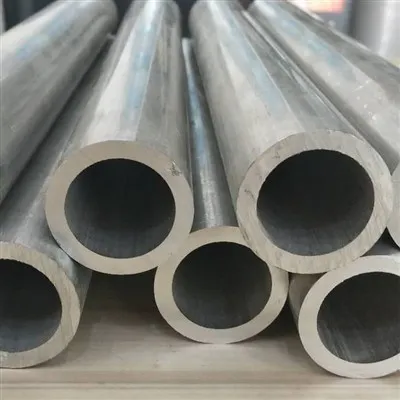
What is the basic knowledge of forging?
Understanding the fundamentals of forging is essential to appreciate why it's a preferred method for producing high-quality metal components.
Forging is a metalworking process that shapes metal using localized compressive forces. It involves heating the metal to a malleable state and then forcing it into a desired shape using dies. This process refines the metal's grain structure, increasing its strength, toughness, and fatigue resistance.
The basic principles of forging are quite elegant, focusing on deforming metal without removing material. This "chipless" manufacturing method is key to producing parts with superior mechanical properties. For clients who are traders or manufacturers, understanding this means they can rely on the inherent strength and integrity of forged components.
Here are the core concepts of forging:
Deformation: The fundamental act of changing a metal's shape through applied force.
Temperature: Metals are typically heated to increase their ductility and reduce the force needed for deformation. This is known as hot forging. Cold forging involves shaping at or near room temperature.
Dies: These are the tools that impart the desired shape onto the metal workpiece. They can be simple (open-die) or complex cavities (closed-die).
Force Application: This is achieved through hammers, mechanical presses, or hydraulic presses. The type of force (impact or slow squeeze) and its magnitude are critical.
Grain Structure Refinement: As the metal is deformed, its internal grain structure aligns along the flow lines, creating a stronger, more isotropic material. This is a major advantage of forging.
This process fundamentally alters the metal's internal structure, making forged parts inherently stronger and more reliable than those made by casting or machining from stock.
What is the new technology in forging?
The forging industry is constantly evolving. New technologies aim to improve efficiency, precision, and the ability to work with advanced materials.
New technologies in forging include advanced simulation software for process optimization, robotic automation for handling and manipulation, induction heating for precise temperature control, and the development of new alloys and additive manufacturing techniques that complement traditional forging.
It's exciting to see how forging technology is advancing. These innovations allow us to push the boundaries of what's possible, creating even more complex and high-performance parts with greater efficiency. For our clients, this means access to cutting-edge solutions and improved product quality.
Here are some key advancements:
Advanced Simulation Software: Computer-aided engineering (CAE) and finite element analysis (FEA) software allow us to simulate the entire forging process before production. This helps optimize die design, predict potential defects, and minimize material waste, saving significant time and cost.
Robotic Automation: Robots are increasingly used for tasks like transferring hot billets, manipulating parts between dies, and even die loading. This improves safety, consistency, and throughput.
Precision Heating Technologies: Induction heating is becoming more prevalent. It offers faster heating cycles and more precise temperature control for the workpiece, which is crucial for achieving optimal material properties and preventing overheating or underheating.
New Alloy Development: Research into new aluminum alloys with enhanced properties (like higher strength-to-weight ratios or improved high-temperature performance) is ongoing, enabling the creation of lighter and stronger forged components.
Hybrid Manufacturing: Combining forging with additive manufacturing (3D printing) is an emerging area. This allows for the creation of complex geometries that are difficult or impossible to achieve through traditional forging alone, especially for prototypes or highly specialized parts.
These technologies enable us to deliver higher quality, more complex aluminum forged components to our clients, meeting the evolving demands of industries worldwide.
Can aluminum be hot forged?
Yes, aluminum can definitely be hot forged. In fact, it's a common and very effective method for shaping aluminum.
Aluminum can be effectively hot forged. This process involves heating the aluminum alloy to a temperature above its recrystallization point, making it more ductile and easier to shape using dies, which refines its grain structure and enhances its mechanical properties.
The question of whether aluminum can be hot forged is a fundamental one, and the answer is a resounding yes. Hot forging is a cornerstone of our operations at SWA Forging because it allows us to create complex shapes with superior material integrity.
Here's why hot forging is so beneficial for aluminum:
Increased Ductility: Heating aluminum significantly increases its ductility, meaning it can be stretched and shaped with less force and without fracturing.
Reduced Force Requirements: Because the metal is more pliable at higher temperatures, less energy is needed to deform it compared to cold forging.
Improved Grain Structure: The heat and pressure involved in hot forging refine the aluminum's internal grain structure. The grains align with the direction of metal flow, creating a stronger, more homogeneous material with better mechanical properties like tensile strength and fatigue resistance.
Complex Shapes: Hot forging allows for the creation of intricate shapes and designs that would be difficult or impossible to achieve through cold working.
While hot forging is common, the specific temperatures and processes must be carefully controlled for each alloy to avoid detrimental effects like oxidation or burning.
What temperature is needed to forge 6061 aluminum?
When working with specific alloys like 6061, temperature control is critical for successful forging. Each alloy has an ideal temperature range.
To forge 6061 aluminum, it is typically heated to a forging temperature range of 750°F to 950°F (400°C to 510°C). The specific temperature within this range depends on the desired outcome, die design, and the capabilities of the forging equipment.
Understanding the precise temperature requirements for specific alloys like 6061 is vital for producing high-quality forgings. Deviating from the optimal temperature range can lead to suboptimal mechanical properties or even material defects. This level of detail is crucial for ensuring that the parts we deliver meet the exact specifications our clients expect.
Here's a bit more detail on why that temperature range is important for 6061:
Recrystallization: Within this temperature range, the aluminum alloy undergoes recrystallization. This process involves the formation of new, strain-free grains, which helps to reduce internal stresses and refine the metal's microstructure.
Ductility and Formability: At these temperatures, 6061 aluminum exhibits optimal ductility, allowing it to be deformed into complex shapes without cracking or excessive tearing.
Minimizing Defects: Forging at temperatures too low can require excessive force, potentially leading to cracking, while forging at temperatures too high can cause excessive oxidation, grain growth, or even melting, which would compromise the material's integrity and properties.
Die Design and Process: The exact temperature chosen within the range can also influence the forging speed, the flow of material within the dies, and the final mechanical properties. For instance, lower temperatures might be used for more detailed work, while higher temperatures might be preferred for easier flow in complex shapes.
By carefully controlling the heating process to fall within this specific range for 6061 aluminum, we ensure that the forging process is efficient and that the resulting components possess the intended strength, form, and quality.
Conclusion
Aluminum forging is a heat and pressure shaping process that refines metal structure. New technologies enhance precision and efficiency, with hot forging being common for alloys like 6061 within specific temperature ranges.


