


Aluminum Alloys And High Temperatures: Performance Under Heat
Oct 29, 2025
Are you working on projects that involve elevated temperatures and need to know if aluminum alloys can maintain their integrity? Understanding their thermal limits is crucial.
Aluminum alloys can withstand high temperatures, but their strength significantly decreases as temperature increases. Pure aluminum begins to soften around 200°C (392°F) and its strength drops substantially above this point. Heat-treated wrought aluminum alloys, like 6061 or 7075, generally maintain useful strength at temperatures up to about 150-200°C (302-392°F). Beyond this range, their mechanical properties, especially tensile strength and yield strength, degrade rapidly as the alloying elements that provide strength begin to precipitate out or anneal themselves. Cast aluminum alloys, especially those enhanced for high-temperature use (often containing silicon, nickel, or copper), can perform better at moderately high temperatures, sometimes up to 250-300°C (482-572°F), but their performance is still considerably reduced compared to their room-temperature capabilities. Temperatures around 400°C (752°F) are generally considered too high for most common aluminum alloys for structural applications, as they would likely lose most of their load-bearing capacity and could even begin to creep (deform slowly under sustained stress). Some specialized high-temperature aluminum alloys, often cast and with specific alloying additions like yttrium or rare earth elements, are being developed to push these temperature limits higher, but for most standard aluminum alloys, structural integrity is compromised well below 400°C. For high-temperature applications, SWA Forging specifically selects and forges aluminum alloys known for their maintained strength and stability under thermal stress, ensuring reliability in demanding operational conditions.
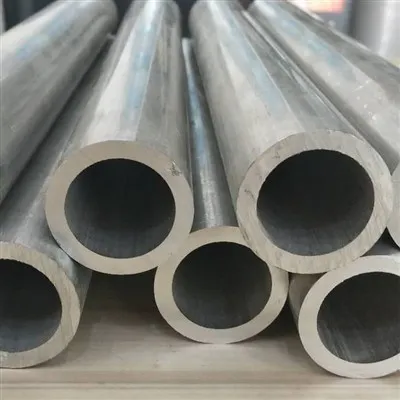
At SWA Forging, we understand the critical limitations of aluminum alloys at elevated temperatures. This is why for high-temperature applications, we meticulously select and forge specific aluminum alloys renowned for their ability to retain strength and structural integrity under thermal stress. Our focus ensures that the large-diameter forged rings and discs we supply remain reliable and performant even when subjected to demanding operational conditions involving heat.
Can aluminium withstand high temperatures?
Are you wondering if aluminum, a lightweight metal, can handle the heat in industrial processes or engine components? The answer is nuanced, depending on the specific alloy and application.
Yes, aluminum can withstand high temperatures, but its ability to maintain structural integrity and mechanical strength is significantly temperature-dependent. Pure aluminum starts to soften and lose a considerable amount of its strength at relatively low temperatures, typically above 200°C (392°F). However, aluminum alloys, which are enhanced with alloying elements like copper, silicon, magnesium, and zinc, offer improved performance at elevated temperatures compared to pure aluminum. Many common heat-treatable aluminum alloys, such as 6061-T6 or 7075-T6, can maintain a significant portion of their room-temperature strength up to about 150°C to 200°C (302°F to 392°F). Beyond this range, their strength begins to decrease more rapidly as the heat affects the precipitation hardening structure, which is responsible for much of their strength. Cast aluminum alloys, especially those formulated with higher percentages of silicon, nickel, or copper, can often withstand slightly higher temperatures than wrought alloys, sometimes reaching up to 250°C (482°F) to 300°C (572°F) while retaining usable strength. However, it's crucial to understand that "withstanding" high temperatures can mean different things; while the metal may not melt, its load-bearing capacity can become insufficient for structural roles well below its melting point.
|
Temperature Range (°C / °F) |
Effect on Most Common Wrought Aluminum Alloys (e.g., 6xxx, 7xxx) |
Effect on Common Cast Aluminum Alloys (e.g., A356 w/ Si, Ni) |
Notes |
|
Up to 100°C (212°F) |
Minimal strength loss. Properties remain largely unaffected. |
Minimal strength loss. Properties remain largely unaffected. |
Generally considered "room temperature" performance for most engineering purposes. |
|
100 - 200°C (212 - 392°F) |
Gradual strength reduction begins; significant loss begins above 150°C. |
Gradual strength reduction begins; generally maintain better strength than wrought alloys. |
Performance loss starts becoming noticeable for structural applications. |
|
200 - 300°C (392 - 572°F) |
Rapid strength degradation; often unsuitable for structural load-bearing. |
Significant strength reduction; performance limited for load-bearing applications. |
Only specialized alloys or non-critical components might be used here. |
|
300 - 400°C (572 - 752°F) |
Most standard alloys lose critical structural strength; creep becomes a major concern. |
Many standard cast alloys become too weak for structural use; creep is a significant issue. |
Limited to very specialized alloys or non-structural/heat-dissipating roles. |
|
Above 400°C (752°F) |
Structural integrity is severely compromised; melting point is approached for some alloys. |
Structural integrity is severely compromised; creep is severe. |
Generally too high for most aluminum alloys in any load-bearing application. |
At SWA Forging, we acknowledge the temperature limitations of aluminum alloys. For applications that operate at even moderately elevated temperatures, we meticulously select alloys that are specifically suited for thermal environments, like certain high-silicon cast alloys or specialized wrought alloys, and we consider their temper. This ensures that the forged components we produce retain critical strength and reliability when exposed to heat, preventing premature failure in your demanding operational settings.
What happens to the strength of aluminum alloys at high temperatures?
When subjected to heat, how does an aluminum alloy's ability to resist force change? The answer is a significant reduction in its load-bearing capacity.
As the temperature of aluminum alloys increases, their strength – specifically their yield strength and tensile strength – decreases considerably. This phenomenon is closely related to the metallurgical structure of the alloy. Most common aluminum alloys derive their strength from a process called precipitation hardening (or age hardening), where tiny intermetallic particles are dispersed throughout the aluminum matrix. At room temperature, these particles impede the movement of dislocations (imperfections in the crystal lattice), which is the primary mechanism of deformation. However, as the temperature rises, atomic diffusion rates increase. This increased diffusion causes the precipitated particles to either grow larger (coarsening), reducing their effectiveness at blocking dislocations, or to dissolve back into the aluminum matrix altogether. At even higher temperatures, the overall crystal structure itself becomes more mobile, leading to phenomena like creep – a slow, continuous deformation under constant stress. Consequently, at elevated temperatures, aluminum alloys lose their ability to resist applied loads, becoming softer and less stiff. The extent of strength loss is greater at higher temperatures and depends heavily on the specific alloy composition and its heat treatment state.
|
Microstructural Change at High Temp. |
Effect on Strength |
Manifestation |
|
Increased Atomic Diffusion |
Facilitates particle coarsening and dissolution of precipitates. |
Reduction in the density of obstacles to dislocation movement. |
|
Precipitate Coarsening |
Larger precipitate particles are less effective at blocking dislocations. |
Lower yield strength and tensile strength; a weaker material. |
|
Precipitate Dissolution |
The hardening particles disappear, reverting the alloy closer to its annealed state. |
Significant loss of strength, especially in age-hardened alloys (like 6xxx and 7xxx series). |
|
Increased Dislocation Mobility |
Atoms can move more easily, allowing dislocations to glide and cause plastic deformation. |
Reduced stiffness and lower yield strength. |
|
Creep Phenomenon |
Atoms can move and rearrange under sustained stress, causing slow, permanent deformation over time. |
Deformation under constant load; critical for long-term performance at high temperatures. |
|
Annealing Effects |
Heat can reverse some of the work hardening effects introduced during manufacturing, leading to softening. |
Reduced overall strength and increased ductility. |
At SWA Forging, we are keenly aware of how heat impacts the strength composition of aluminum alloys. When designing for applications with thermal challenges, we select specific alloys and tempers that retain their mechanical properties best under such conditions. Our forging process also plays a role, and by carefully controlling it for high-temperature alloys, we ensure the resulting large-diameter rings and discs maintain the necessary strength and dimensional stability, providing our clients with dependable components that can perform reliably when they are heated.
What temperature is too high for aluminum?
When does aluminum, despite its reputation for being heat-resistant in some contexts, reach a point where it's no longer structurally viable or safe? This limit varies by alloy.
The temperature at which aluminum or its alloys become "too high" for structural applications is not a single, fixed point and depends heavily on the specific alloy and the intended use, particularly the applied stress. For most common aluminum alloys, particularly the heat-treated wrought alloys like 6061 and 7075, structural integrity is significantly compromised above approximately 200°C (392°F). At this temperature, their yield strength can drop by more than 30-40% of their room-temperature values, making them unsuitable for load-bearing components. For cast aluminum alloys, especially those with silicon or nickel additions designed for higher temperatures, this critical threshold might be slightly higher, perhaps around 250°C to 300°C (482°F to 572°F). Above these temperatures, creep becomes a dominant failure mechanism. Creep is the slow, permanent deformation that occurs over time when a material is subjected to stress at elevated temperatures. Therefore, even if an alloy hasn't melted, it can fail due to excessive creep if the temperature is too high or the stress is too great. Temperatures approaching 400°C (752°F) are generally considered too high for almost all standard aluminum alloys for any application requiring sustained structural stability. The melting point of aluminum itself is 660°C (1221°F), but its alloys lose usable strength long before that.
|
Temperature Thresholds for Standard Aluminum Alloys |
Functional Implications |
Consideration for SWA Forging's Products |
|
Up to ~150°C (302°F) |
Structural integrity maintained. Most common alloys (6xxx, 7xxx wrought; high-silicon cast) retain over 80-90% of their room-temperature strength. |
Standard operating range for many industrial applications. SWA Forging can produce components from a wide array of alloys suitable for these temperatures. |
|
~150°C to 250°C (302°F to 482°F) |
Significant strength reduction begins. Structural load-bearing capacity is compromised, particularly for wrought alloys. Creep becomes a consideration. |
Requires careful alloy selection. SWA Forging would recommend specific alloys known for better high-temperature performance and possibly adjust temper or forging parameters to optimize retained strength. Critical applications may require detailed analysis. |
|
~250°C to 400°C (482°F to 752°F) |
Too high for most standard structural applications. Significant creep can occur. Melting point is still relatively far, but strength is insufficient. |
Materials in this range are treated with extreme caution. Only select high-temperature alloys (often specialized cast ones, or experimental wrought ones) might be considered, and even then, only for low-stress or heat-dissipating roles. SWA Forging likely would not recommend standard alloys for structural use here. |
|
Above 400°C (752°F) |
Generally unsuitable for structural use. Strength is drastically reduced; creep is severe and rapid. Approaching melting temperatures for some alloys. |
Not viable for almost any load-bearing application with standard aluminum alloys. Extreme caution and specialized materials are required. SWA Forging would steer clients away from standard alloys for such conditions. |
|
Melting Point of Aluminum |
660°C (1221°F) |
Aluminum alloys melt at temperatures slightly below pure aluminum, depending on composition. Even if not melted, structural integrity is lost long before melting. |
At SWA Forging, we design and manufacture components for challenging environments. When high temperatures are a factor, we go beyond standard selections. We specifically choose aluminum alloys renowned for maintaining strength and dimensional stability under thermal stress. This allows us to produce large-diameter forged rings and discs that reliably perform even when subjected to significant heat, ensuring your critical operational conditions are met with robust, engineered solutions.
Can aluminum withstand 400 degrees?
When considering a challenging temperature like 400°C (752°F), can typical aluminum alloys still be structurally sound, or is this temperature range too extreme? For most standard applications, it is too high.
For most standard aluminum alloys, including common wrought alloys like 6061 and 7075, and even many cast alloys, a continuous operating temperature of 400°C (752°F) is generally considered too high for any application requiring sustained structural integrity. At 400°C, the yield strength of these alloys would have dropped drastically, potentially to less than 20-30% of their room-temperature strength. More critically, creep – the slow deformation under sustained stress – becomes a dominant factor. A component held under load at 400°C would likely deform significantly over time, leading to failure even at stresses that would be considered very low at room temperature. Some highly specialized aluminum alloys, often containing elements like yttrium, rare earth elements, or significant amounts of silicon and nickel in cast forms, are being developed or used for higher temperature applications. For example, some advanced cast aluminum alloys might retain some mechanical properties up to around 300°C – 350°C. However, at 400°C, even these specialized alloys would be operating at their extreme limits and likely pushing beyond levels suitable for many structural applications. For temperatures around 400°C and above, materials like steels, superalloys (nickel-based or cobalt-based alloys), or ceramics are typically necessary for load-bearing components.
|
Temperature |
Aluminum Alloy Performance at 400°C (752°F) |
Typical Material Substitutes |
SWA Forging's Approach for Very High Temps |
|
400°C (752°F) |
Structural failure highly probable. Strength is minimal; creep is severe. Most common alloys are completely unsuitable for load-bearing parts. |
Carbon steels (limited), low-alloy steels (e.g., Cr-Mo steels), stainless steels, nickel-based superalloys (e.g., Inconel), cobalt-based superalloys, ceramics. |
While SWA Forging specializes in aluminum alloys, for applications genuinely operating at or above 400°C structurally, we would advise clients to consider materials outside our aluminum portfolio, or we would collaborate to find specialized aluminum alloys if any are proven viable and our forging capabilities align with their specific requirements. |
At SWA Forging, we prioritize the engineering integrity of our forged components. While we focus on aluminum alloys, we are acutely aware of their thermal limitations. For applications genuinely exceeding the reliable upper temperature limits of aluminum (approaching 400°C or higher), we are prepared to discuss the feasibility of using specific, specialized aluminum alloys if they exist and are suitable, or to guide clients towards alternative material solutions that would better meet their stringent performance criteria in such extreme thermal environments.
Conclusion
Aluminum alloys' strength significantly decreases at high temperatures, with most standard alloys losing structural integrity above 200°C, making specialized alloys and materials like steel or superalloys necessary for applications near or above 400°C.


