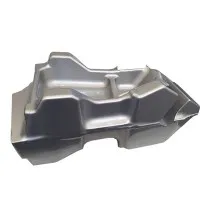
How Does Forging Unlock The True Strength-To-Weight Ratio Of Aluminum Alloy?
Nov 07, 2025
You need parts that are both strong and light, but the numbers on a material datasheet can be deceiving. Relying on them alone can lead to over-engineering or, worse, unexpected failures.
The strength-to-weight ratio is a measure of a material's strength divided by its density. For aluminum alloys, this ratio is naturally high, but its true potential is unlocked through forging. SWA Forging's process refines the grain structure, transforming a standard alloy into a high-performance material where every gram contributes maximum strength.
In my work at SWA Forging, I've come to see that the strength-to-weight ratio isn't just a number; it's an engineered outcome. Our clients in the automotive and machinery sectors rely on this metric to build faster, more efficient, and more reliable equipment. But they know that the number for a raw alloy is just a starting point. Our forging process takes that potential and makes it a reality. We transform the material's internal structure, so the final forged ring or disc isn't just strong for its weight-it represents the maximum possible strength for that weight.
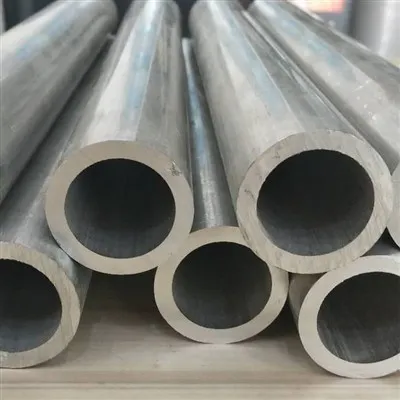
What is the Strength-to-Weight Ratio of an Aluminium Alloy?
You see this term used everywhere, but what does it actually mean for your project? How is this important number calculated?
Without a clear understanding of this metric, you can't accurately compare materials. This could lead you to choose a heavier, less efficient option for your design.
The strength-to-weight ratio is a simple comparison of a material's strength (usually its ultimate tensile strength) to its density. It tells you how strong a material is for its weight. A higher number means a stronger material for a given weight, which is ideal for performance-critical applications. Aluminum alloys are known for having an excellent strength-to-weight ratio.
When we discuss this with our clients, we move beyond the basic definition. For us, the ratio is a measure of efficiency. How much performance can we pack into every kilogram of aluminum? The answer lies in our process. While an alloy like 6061 has a good natural ratio, our forging process improves it. By heating and mechanically compressing the metal, we eliminate internal voids and create a fine, uniform grain structure. This process makes the material stronger without adding a single gram of weight. So, when our clients machine a part from an SWA Forging disc, they are starting with a material that has an optimized, engineered strength-to-weight ratio, giving them a significant performance advantage from the very beginning.
How Much Weight Can an Aluminum Alloy Hold?
This seems like a simple question, but the answer is complex. How do you determine the load-bearing capacity for your specific part?
Simply looking at a material's strength is not enough. A flat sheet and a structured beam made from the same alloy will hold vastly different amounts of weight.
An aluminum alloy's ability to hold weight is not an intrinsic property; it depends entirely on the part's design, shape, and size. A thick, forged aluminum I-beam can support thousands of kilograms, while a thin wire will support very little. The key is to design the component to efficiently manage stress. Our job is to provide a forged material with flawless integrity, so the part can meet its designed load capacity without fail.
This is a critical point we emphasize with our machining customers. They are the experts in design, and we are the experts in the material's foundation. The question "how much weight can it hold?" is answered through engineering calculations that consider the part's final geometry and the type of load it will experience (e.g., tension, compression, shear). Our responsibility at SWA Forging is to guarantee that the material itself is not the weak link in their design. Because our forged products have no hidden porosity and possess a uniform internal structure, engineers can design parts with more confidence and smaller safety margins. They know that the excellent properties of the aluminum alloy are consistent through the entire volume of the material we provide.
|
Factor Affecting Load Capacity |
SWA Forging's Contribution |
|
Component Design & Shape |
We provide a solid, high-integrity foundation (forged rings and discs) that allows engineers the freedom to design complex and optimized shapes. The part's final geometry is what determines how it distributes stress, and a reliable material is essential for that design to function correctly. |
|
Alloy Selection |
We help clients select the right alloy for the required strength. A part made from 7075 will hold significantly more weight than an identical part made from 6061. Our expertise ensures the chosen alloy has the properties needed to meet the design's load requirements. |
|
Material Integrity |
This is our core promise. A cast part might have hidden voids that can lead to failure under a load far below its theoretical maximum. Our forging process eliminates these defects. This ensures that the material's actual load-bearing capacity matches its theoretical, engineered potential, providing reliability and safety. |
What Is the Strength-to-Weight Ratio of 6061?
Let's get specific. 6061 is one of the most common alloys. What performance can you expect from it?
Knowing the general properties of aluminum is not enough. You need specific data for the alloys you use most often to make accurate design and purchasing decisions.
The strength-to-weight ratio of 6061 aluminum alloy depends heavily on its temper. For 6061-T6, a common condition for forged products, the ratio is excellent. With a typical tensile strength of around 310 MPa and a density of 2.70 g/cm³, its strength-to-weight ratio is approximately 115 kN·m/kg. This makes it a top performer for a wide range of structural applications where a good balance of strength, corrosion resistance, and light weight is required.
At SWA Forging, 6061-T6 is one of our most requested materials, and for good reason. It's the reliable workhorse of the industry. The "-T6" part is critical; it refers to the heat treatment process that we apply after forging. This process is what unlocks the alloy's full strength potential. The forging process itself provides the flawless internal structure, and the T6 temper then optimizes the material's properties at a microscopic level. So when we provide a 6061-T6 forged disc, we are delivering on two promises. First, the material is internally sound, dense, and free of defects. Second, it has been properly treated to achieve that high strength-to-weight ratio of around 115 kN·m/kg. This dual guarantee gives our clients the confidence they need to machine high-performance parts.
What Alloy Has the Best Strength-to-Weight Ratio?
When you absolutely need the highest performance, which alloy stands above the rest? What is the peak of aluminum alloy engineering?
Chasing the "best" material can lead you to options that are impractical or too expensive. It's important to know the top performers but also to understand their trade-offs.
For commercially available aluminum alloys, the 7xxx series, particularly 7075-T6, offers one of the best strength-to-weight ratios. Its tensile strength can be as high as 572 MPa with a density of 2.81 g/cm³, yielding a ratio of about 204 kN·m/kg, which is comparable to many high-strength steels. Even more advanced aluminum-lithium (Al-Li) alloys can exceed this, but they are highly specialized and costly.
While 7075 is the champion for many applications, the "best" alloy is always the one that is right for the job. This is the core of our consulting with clients. Yes, we can forge 7075 to create incredibly strong and light components for aerospace and other demanding industries. Our process ensures that this high-performance alloy delivers every bit of its potential. However, we also recognize that for many industrial applications, the excellent and more cost-effective ratio of 6061 is the smarter choice. Our purpose is not just to sell the strongest material, but to partner with our clients to find the most effective solution. We ensure that whichever alloy they choose, our forging process elevates its performance, refining its grain structure and guaranteeing an integrity that makes the most of every gram. The best ratio is the one that is engineered for success.
Conclusion
The strength-to-weight ratio is not a fixed number; it is an engineered outcome. SWA Forging transforms material potential, ensuring every gram contributes to maximum strength and guaranteed performance.