


Need High-Performance Aluminum? Explore SWA's Forged Solutions For Demanding Applications.
Sep 05, 2025
Are you struggling to find aluminum materials that can withstand your most demanding applications? Discover how SWA Forging's precision-forged components deliver unparalleled strength and reliability.
When standard aluminum materials like bars, tubes, or plates fall short of the strength, durability, or specific performance requirements for your critical applications, SWA Forging's precision-forged aluminum rings and discs offer superior, customized solutions engineered for extreme performance.
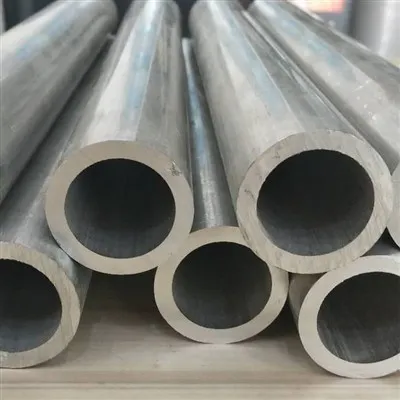
Many of our clients at SWA Forging begin their project discussions by exploring standard aluminum materials. These are often readily available in forms like round bars, flat bars, seamless tubes, or plates, serving as excellent starting points for a wide array of components. They offer a good balance of properties and are generally cost-effective and easy to machine for simpler parts. However, for applications operating under extreme conditions-such as high stress, high temperatures, corrosive environments, or requiring exceptional fatigue resistance-these standard forms often reach their performance limits. Achieving optimal material integrity, precise geometric control for complex stress paths, or the consolidation of multiple parts into a single, robust component typically requires a more advanced manufacturing approach. This is precisely where SWA Forging excels. We specialize in precision forging of high-performance aluminum alloys, transforming them into complex, near-net-shape rings and discs that possess significantly enhanced strength, superior toughness, and optimized grain structures to meet and exceed the demands of critical applications.
How strong is forged aluminum?
The strength of forged aluminum is exceptionally high and varies significantly based on the specific alloy, its temper (heat treatment), and the precise forging process used.
Forged aluminum alloys can achieve very high tensile strengths, with premium alloys like 7075-T6 reaching over 530 MPa (77,000 psi). The forging process itself refines the metal's grain structure, aligning it with component contours to enhance toughness and fatigue life, making it far stronger and more reliable under stress than cast or machined alternatives.
When clients at SWA Forging inquire about the strength of our forged aluminum products, they are often looking for materials that can perform reliably in demanding environments. The strength we achieve is a direct result of both the chosen alloy and our precision forging techniques. For instance, using 7075, a high-zinc alloy, we can produce components with a tensile strength exceeding 530 MPa when it's in the T6 temper state. This is comparable to some steels, but with a fraction of the weight. Similarly, 6061-T6, a more versatile alloy, offers respectable strengths of around 310 MPa. Beyond just tensile strength, forging significantly improves the material's toughness and fatigue resistance. The intense pressure and controlled deformation align the aluminum's internal grain structure. This alignment means that stress is distributed more evenly, and the material is less prone to crack initiation and propagation. This makes forged aluminum exceptionally robust for applications involving repeated stress cycles or impact, a critical advantage over materials with less optimized grain structures.
Strength metrics for forged aluminum:
Tensile Strength: The maximum stress the material can withstand before breaking.
Yield Strength: The stress at which the material begins to deform permanently.
Fatigue Strength: The material's ability to resist failure under repeated loading cycles.
Toughness: The material's capacity to absorb energy and deform plastically before fracturing.
These properties are enhanced by the forging process, providing superior performance.
What is the best aluminum for forging?
Selecting the "best" aluminum alloy for forging depends on the specific performance requirements of the application, balancing strength, corrosion resistance, weldability, and cost considerations.
For applications demanding the absolute highest strength and fatigue resistance, alloys such as 7075 and 7050 are considered top choices for forging due to their excellent response to heat treatment. For a versatile balance of good strength, outstanding corrosion resistance, and ease of processing, 6061 is a highly favored and widely used alloy for forging a broad range of components.
At SWA Forging, our expertise lies in selecting the ideal aluminum alloy to meet each client's unique needs for forged rings and discs. When superior strength is the paramount concern, particularly for aerospace, defense, or high-performance industrial applications, the 7000 series alloys, such as 7075 and 7050, are our go-to materials. These alloys, primarily strengthened by zinc, achieve remarkable mechanical properties after heat treatment and are highly amenable to the forging process, which further optimizes their grain structure. For applications that require a robust combination of good strength, excellent resistance to environmental degradation, and good machinability, 6061 is an exceptional choice. It's a highly versatile alloy that forges well and provides reliable performance across a wide spectrum of uses. We also consider other series, like 2xxx alloys for their high strength and good fatigue performance, and 5xxx alloys for their excellent corrosion resistance, especially in marine environments. The optimal alloy is always a carefully considered decision based on a detailed understanding of the application's demands.
Key aluminum alloys for forging:
7075: Renowned for its exceptionally high strength, making it ideal for critical structural components.
7050: Offers similar high strength to 7075 but with improved fracture toughness and resistance to stress corrosion cracking.
6061: A highly versatile alloy providing a good balance of strength, corrosion resistance, and weldability.
2xxx Series (e.g., 2024): Used for applications requiring high strength and good fatigue resistance.
5xxx Series (e.g., 5083): Favored for excellent corrosion resistance, particularly in marine settings.
The selection process is always guided by the specific application's performance criteria.
What is the best grade of aluminum for marine applications?
For marine applications, the best aluminum alloys are those that offer excellent corrosion resistance, particularly against saltwater, while maintaining sufficient strength.
The best grades of aluminum for marine applications are typically those from the 5000 series, such as 5083 and 5086, due to their superior resistance to saltwater corrosion and good strength. While the 6000 series alloys like 6061 also offer good corrosion resistance and are widely used, the 5000 series generally performs better in harsh marine environments.
Clients at SWA Forging who require components for marine environments, such as boat hulls, offshore structures, or maritime equipment, need materials that can withstand the relentless attack of saltwater. Aluminum is a great choice for marine use because it's lightweight and resists corrosion better than steel, but the specific alloy is critical. The 5000 series alloys, which primarily use magnesium as the alloying element, are outstanding in this regard. 5083, for example, has excellent resistance to seawater corrosion and is commonly used for welded structures like ship hulls. It also offers good strength. Similarly, 5086 provides a great combination of corrosion resistance and moderate strength. While 6061 is a very popular and strong alloy with good corrosion resistance, it can be more susceptible to certain forms of corrosion, like galvanic corrosion, when in contact with other metals in a saltwater environment compared to the 5000 series. Therefore, for critical marine components where longevity and resistance to the harsh marine atmosphere are paramount, the 5000 series alloys are generally considered the superior choice, and our forging process ensures these alloys maintain their integrity and strength.
Top aluminum grades for marine applications:
5083: Excellent corrosion resistance in marine environments, good weldability, and good strength.
5086: Similar to 5083, offering superior corrosion resistance and good formability.
6061: Offers a good balance of strength, corrosion resistance, and cost, but can be more prone to certain types of corrosion than 5xxx alloys.
5052: Good corrosion resistance and formability, often used for smaller parts or less demanding applications.
The 5000 series alloys are generally preferred for their enhanced resistance to saltwater.
What is the best aluminum alloy for high temperature applications?
For high-temperature applications, aluminum alloys that maintain their strength and structural integrity at elevated temperatures are required, often those with specific alloying elements.
For sustained high-temperature applications, aluminum alloys with copper and silicon, such as the 2000 series (e.g., 2014, 2219) and certain 7000 series alloys with specific tempers, can perform well up to moderate high temperatures. However, for very high temperatures where strength retention is critical, specialized aluminum alloys or even other materials might be more suitable, as pure aluminum or alloys with magnesium tend to soften significantly at elevated heat.
When clients at SWA Forging need components for high-temperature environments, it's important to understand that aluminum generally loses strength as temperatures increase. Unlike many steels, aluminum's properties degrade more rapidly at elevated heat. However, certain alloys are formulated to perform better than others under these conditions. For moderate high-temperature applications, such as some automotive engine components or industrial machinery parts that operate up to around 200-300°C (400-570°F), alloys like 2014 or 2219, which contain copper, can maintain their strength reasonably well due to their heat-treatable nature. Some specific tempers of 7000 series alloys might also offer good performance within this range. It's crucial to remember that alloys relying heavily on magnesium for strength, like the 5000 series, are generally not suitable for elevated temperatures as the magnesium can diffuse and cause softening. For temperatures significantly above 300°C, other materials like certain high-performance steels, nickel alloys, or titanium often become more suitable choices, as aluminum's mechanical properties degrade too much. Our forging process can help optimize the structure of these higher-temperature aluminum alloys to maximize their performance within their operational limits.
Aluminum alloys for high-temperature considerations:
2xxx Series (e.g., 2014, 2219): Contain copper, offering good strength retention at moderate high temperatures.
7xxx Series (specific tempers): Certain alloys in this series can also perform adequately at elevated temperatures.
Pure Aluminum (1xxx series): Has poor high-temperature strength but good corrosion resistance.
5xxx Series (e.g., 5083): Generally unsuitable for high-temperature use due to softening.
The suitability depends on the specific operating temperature and duration.
Conclusion
When standard aluminum materials are not enough, SWA Forging provides high-performance, precision-forged aluminum rings and discs, engineered with superior alloys and processes to meet the toughest application demands.


