


Where Can I Get Aluminum For Construction?
May 22, 2025
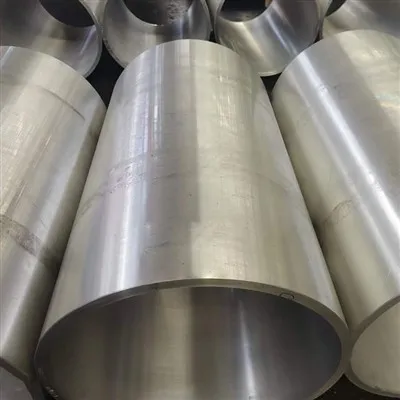
Finding the right aluminum for your construction project can be a real headache. If you choose the wrong type or supplier, you could face delays or even structural issues. For construction projects, you can typically get aluminum from specialized metal distributors, architectural aluminum suppliers, and sometimes directly from manufacturers for large or custom orders of semi-finished products like extrusions or sheets. Transition Paragraph: Here at SWA Forging, we focus on producing high-quality aluminum alloy materials, especially large-diameter forged rings and forged discs. While these aren't usually direct "off-the-shelf" construction items like a window frame, the foundational materials we create are often purchased by traders or machining plants who then supply or create components for various industries, including construction. Helping you "Master Southwest Aluminum Right" means understanding the entire supply chain, so let's explore where construction-grade aluminum comes from.
What Kind Of Aluminum Is Used In Construction?
Not all aluminum is the same for building. Using an unsuitable alloy can lead to costly problems like corrosion or lack of strength, compromising your project. Common aluminum alloys in construction include 6061 and 6063 for extrusions like window frames and curtain walls, and 5052 or 3003 for sheet applications like roofing and paneling. Dive deeper Paragraph: When we talk about aluminum for construction, we're almost always talking about specific alloys. Pure aluminum is too soft for most structural uses. Alloys are mixtures of aluminum with other elements like magnesium, silicon, or copper, which significantly improve its properties like strength and hardness. For construction, some of the most frequently used alloys are from the 6xxx series.
6063 Aluminum Alloy: This is probably the most common for architectural applications. It has good formability, meaning it can be easily extruded into complex shapes for things like window frames, door frames, and curtain wall systems. It also offers good corrosion resistance and a smooth surface finish, which is great for appearance.
6061 Aluminum Alloy: This alloy is stronger than 6063 and is often used for more structural applications where higher strength is needed. You might find it in load-bearing structures, platforms, or machinery components used in construction. It also has good corrosion resistance and weldability. For sheet and plate applications, like roofing, gutters, or facade panels:
3003 Aluminum Alloy: This is a general-purpose alloy with moderate strength and very good corrosion resistance and workability. It's often used for sheet metal work.
5052 Aluminum Alloy: This alloy has higher strength than 3003, especially in saltwater environments, making it good for coastal construction or marine-related structures. At SWA Forging, while our forged products like rings and discs might not be the final window frame, the high-strength alloys we work with (often 2xxx, 6xxx, or 7xxx series) are sometimes machined by our clients into custom connectors, heavy-duty fixtures, or components for construction machinery, where the reliability of a forging is paramount.
|
Alloy Series |
Common Construction Alloys |
Key Properties for Construction |
Typical Applications |
|
6xxx |
6063, 6061 |
Good extrudability, strength, corrosion res. |
Window/door frames, curtain walls, struct. |
|
3xxx |
3003 |
Good workability, corrosion resistance |
Roofing, siding, gutters, general sheet |
|
5xxx |
5052 |
Higher strength, good marine corrosion res. |
Panels, marine structures, tanks |
Where Can You Get Aluminum From?
Knowing what aluminum you need is just the start. Finding a reliable source that can provide the right forms and quantities can be challenging, impacting your project timeline. You can generally get aluminum from metal service centers or distributors, specialized aluminum suppliers, and directly from manufacturers or mills for very large orders or custom specifications. ! Dive deeper Paragraph: The supply chain for aluminum has several layers. For most construction needs, you won't go directly to the primary smelting plant. Instead, you'll likely interact with these types of businesses:
Metal Service Centers / Distributors: These are like the supermarkets for metal. They buy large quantities of various metals, including aluminum, from mills and manufacturers. They stock common alloys and forms (sheets, plates, extrusions, bars) in standard sizes. For many construction projects needing standard items, this is the go-to source. They can often cut material to size and offer quick delivery. Our trader customers often source from or act as such distributors.
Specialized Aluminum Suppliers: Some suppliers focus specifically on aluminum or even on aluminum for particular industries, like architectural aluminum suppliers. They might have a deeper stock of specific profiles or finishes relevant to construction and can offer more specialized advice.
Manufacturers / Mills (like SWA Forging for semi-finished forms): For very large projects or highly custom requirements, it's sometimes possible to work directly with a mill that produces extrusions or sheets, or a specialized manufacturer like us. At SWA Forging, we don't make window frames, but we manufacture large-diameter forged rings and discs to custom specifications. A machining plant needing a high-strength, custom-sized aluminum blank for a specialized construction component or a piece of heavy equipment used in construction might come to us. We provide the quality-certified raw material they then fabricate further. This direct route is more common for industrial buyers requiring specific material properties and certifications, which we proudly provide (ISO9001, product quality certificates, SGS/BV/TUV on request). When choosing a supplier, consider factors like the range of alloys and forms, minimum order quantities, delivery times, processing services (like cutting), and, crucially, their quality certifications.
|
Supplier Type |
Typical Offering |
Best For |
SWA Forging's Connection |
|
Metal Service Center |
Standard alloys/forms, cut-to-size, quick delivery |
General construction needs, smaller to medium orders |
Our trader customers may be or use these |
|
Specialized Alu. Supplier |
Specific architectural profiles, finishes, expertise |
Tailored construction solutions, projects needing specific aesthetics |
Indirectly, through industry ecosystem |
|
Manufacturer/Mill |
Large volume, custom specs, semi-finished products |
Very large projects, OEM, specialized industrial components |
Direct for our forged rings & discs |
Where Can I Find Pure Aluminium?
Thinking "pure" aluminum is best for your project? Pure aluminum is actually quite soft and not usually what's needed for structural strength in construction, leading to potential misapplication. Pure aluminum (99.0% or higher) is typically sourced from specialized metal suppliers or direct from mills for specific industrial uses like high-purity electrical conductors, reflectors, or chemical equipment, not general construction.
Dive deeper Paragraph: When people ask for "pure aluminum," they usually mean aluminum that hasn't been intentionally mixed with other elements to make an alloy. In the aluminum industry, this typically refers to the 1xxx series of aluminum, which is 99% pure or higher. You won't commonly find pure aluminum being used for structural parts in construction. Why? Because it's relatively soft and has low mechanical strength compared to aluminum alloys. Think about it – you can easily bend a piece of pure aluminum foil. That's not what you want for a window frame or a support beam. So, where is it used?
Electrical Conductivity: Pure aluminum has excellent electrical conductivity (though not as good as copper by volume, it's better by weight). So, high-purity aluminum (like 1350 grade) is used for electrical busbars, wiring, and transformer windings.
Corrosion Resistance: It has outstanding corrosion resistance in many environments, which makes it suitable for chemical equipment or certain types of food packaging.
Reflectivity: Highly pure aluminum can be polished to a very reflective surface, making it ideal for light reflectors or decorative finishes where strength isn't the primary concern.
Workability: Being soft and ductile, it's very easy to work and form. If your project specifically requires these properties, you would need to go to specialized metal suppliers who stock high-purity grades or potentially work with a mill that produces them. However, for 99% of construction applications, you will be looking for, and should be using, aluminum alloys like the 6xxx, 5xxx, or 3xxx series I mentioned earlier. At SWA Forging, we deal exclusively in aluminum alloys, as our focus is on providing materials with enhanced mechanical properties, like strength and durability, tailored for demanding applications through the forging process.
Where Can You Find Aluminium?
Ever wonder where this versatile metal actually comes from? Not knowing its origin can make it hard to appreciate the journey it takes before it becomes a construction material. Aluminum is primarily found in bauxite ore. This ore is mined, then refined into alumina (aluminum oxide), which is then smelted through an electrolytic process to produce primary aluminum metal.
Dive deeper Paragraph: Aluminum doesn't just appear out of thin air; it has a fascinating journey from the earth to its usable form.
Bauxite Ore: The primary source of aluminum is a reddish-brown clay-like rock called bauxite. Major bauxite deposits are found in tropical and subtropical regions around the world – think Australia, Guinea, Brazil, and Jamaica. This ore contains aluminum in the form of aluminum hydroxide.
Refining to Alumina (Bayer Process): The mined bauxite ore is transported to refineries. Here, it undergoes a chemical process called the Bayer process. The bauxite is crushed, mixed with caustic soda (sodium hydroxide), and heated under pressure. This dissolves the aluminum compounds, which are then filtered and precipitated to produce a fine white powder called alumina, or aluminum oxide (Al₂O₃). It takes about 4 to 5 tonnes of bauxite to produce 2 tonnes of alumina.
Smelting to Aluminum (Hall-Héroult Process): The alumina is then shipped to smelters. Here, it undergoes an electrolytic process called the Hall-Héroult process. The alumina is dissolved in molten cryolite (a sodium aluminum fluoride mineral) in large pots. A powerful electric current is passed through this mixture, separating the aluminum metal from the oxygen. The molten aluminum sinks to the bottom of the pot and is siphoned off. This process is very energy-intensive.
Alloying and Casting: The primary aluminum produced is then often mixed with other elements (like magnesium, silicon, copper) to create specific alloys with desired properties. This molten alloyed aluminum is then cast into various forms like large ingots, billets (for extrusion or forging), or slabs (for rolling into sheet and plate). It is from these cast forms that products like the ones we make at SWA Forging (forged rings and discs from billets) or the extrusions and sheets used in construction are then produced. Understanding this journey highlights the value and energy embedded in every piece of aluminum.
|
Stage |
Raw Material(s) |
Process Name |
Output Product |
|
Mining |
Bauxite Ore |
Mining/Extraction |
Bauxite Ore |
|
Refining |
Bauxite Ore, Caustic Soda |
Bayer Process |
Alumina (Al₂O₃) Powder |
|
Smelting |
Alumina, Electricity, Cryolite |
Hall-Héroult |
Primary Aluminum Metal |
|
Alloying/Casting |
Primary Aluminum, Alloying Elements |
Casting |
Ingots, Billets, Slabs |
Conclusion
For construction, specific aluminum alloys are key, sourced from distributors or specialized suppliers. Understanding alloys and reliable sources ensures your project's success with this versatile metal.


